Bear Hang & Food Storage Calculator防熊悬挂与食物储存计算器
PCT hang geometry, rope length, canister-vs-hang decisions and the full scented-items list. PCT 悬挂几何、所需绳长、熊罐与悬挂的选择,以及完整气味品清单。
How the food-storage calculator works
Bears defeat food storage by doing exactly three things: standing and reaching up, climbing the trunk and reaching out, and hooking down from the branch. The Pacific Crest Trail hang geometry is the answer to all three. The bag bottom must be at least 10 ft above the ground (12 ft recommended), the bag must hang at least 4 ft out from the trunk, and it must be at least 4 ft below the supporting branch (5 ft recommended). Enter your four measurements and the calculator flags each clearance as pass or fail, then tells you whether the rope you carry is long enough.
The rope formula: 2 × branch height + 6 ft
A hang rope travels from the ground up to the branch and then back down on the far side — that is twice the branch height. You also need working rope for the toss bag, the food-bag knot and tying off to the trunk, which the PCT method estimates at about 6 ft (roughly 2 m). So for the recommended 12 ft branch the minimum is 2 × 12 + 6 = 30 ft (about 9.1 m); a 20 ft branch calls for 46 ft. The calculator converts every figure between feet and metres so a hand calculation on the ground matches the tool exactly.
Branch selection and the other three storage methods
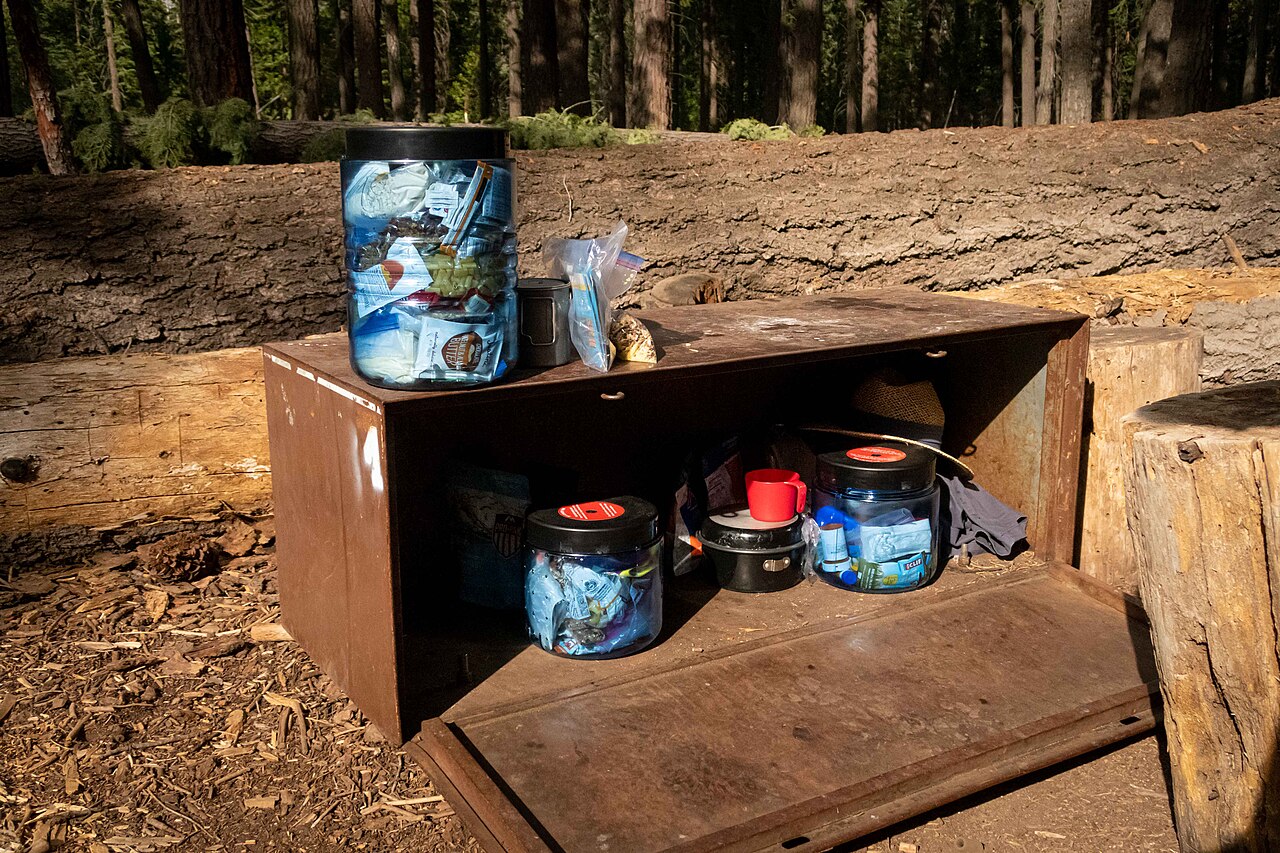
The branch itself must be alive and sturdy — roughly 4 inches (10 cm) thick — with no smaller branches beneath it that a cub could climb out on, and it has to be too high for an adult to reach the bag from the trunk. When no such tree exists, a hang is not an option: an IGBC-listed canister is required along much of the Sierra (Yosemite, Sequoia–Kings Canyon, the JMT/PCT corridor), a metal locker solves storage in developed campgrounds, and an Ursack-style soft bag is accepted only by some land managers — it is crushable, not rodent-proof and banned in Sierra national parks, so check before you travel. Whichever method you use, the camp triangle does not change: store, cook and eat about 100 yd (91 m) from your tent, wash up at least 200 ft (60 m) from water, and put every scented item — food, trash, stove, pots, toothpaste, sunscreen, lip balm, deodorant and wipes — in storage, never the vestibule.
计算原理
熊破坏食物储存只会三招:站立向上够、爬上树干向外够、从树枝探身向下咬。PCT(太平洋屋脊步道)悬挂几何正是针对这三招:袋底离地至少 10 英尺(建议 12 英尺,约 3.7 米)、袋距树干水平至少 4 英尺(1.2 米)、袋距下方支撑枝至少 4 英尺(建议 5 英尺,约 1.2–1.5 米)。输入四个尺寸,计算器逐项判定通过/失败,并检查你带的绳子是否够长。
绳长公式:2 × 枝高 + 6 英尺
绳子要从地面先上到树枝、再从另一侧下回地面,等于两倍枝高;此外投掷袋、系食物袋、绑树干还需要操作余量,PCT 方法取约 6 英尺(约 2 米)。因此推荐的 12 英尺枝高对应最小绳长 2 × 12 + 6 = 30 英尺(约 9.1 米);20 英尺的枝则需要 46 英尺。所有数字都在英尺和米之间换算,现场手算与工具结果完全一致。
选枝与另外三种储存方式
树枝本身必须鲜活结实——粗约 4 英寸(10 厘米)——下方没有幼熊能爬出去的小枝,且高度要让成熊从树干处够不到袋子。没有这样的树时悬挂就不成立:IGBC 认证防熊罐在内华达大部分区域(优胜美地、红杉—国王峡谷、JMT/PCT 走廊)是强制装备;开发营地可用金属食物储存柜;Ursack 类软熊袋仅部分管理方接受——会被压变形、不防啮齿动物,且在内华达国家公园被禁用,出发前必须核实。无论用哪种方式,营地三角不变:储存、做饭、吃饭三处距帐篷约 100 码(91 米);洗涮距水源至少 200 英尺(60 米);食物、垃圾、炉具、锅具、牙膏、防晒霜、润唇膏、除臭剂、湿巾等一切气味品全部入储,绝不放帐篷前庭。