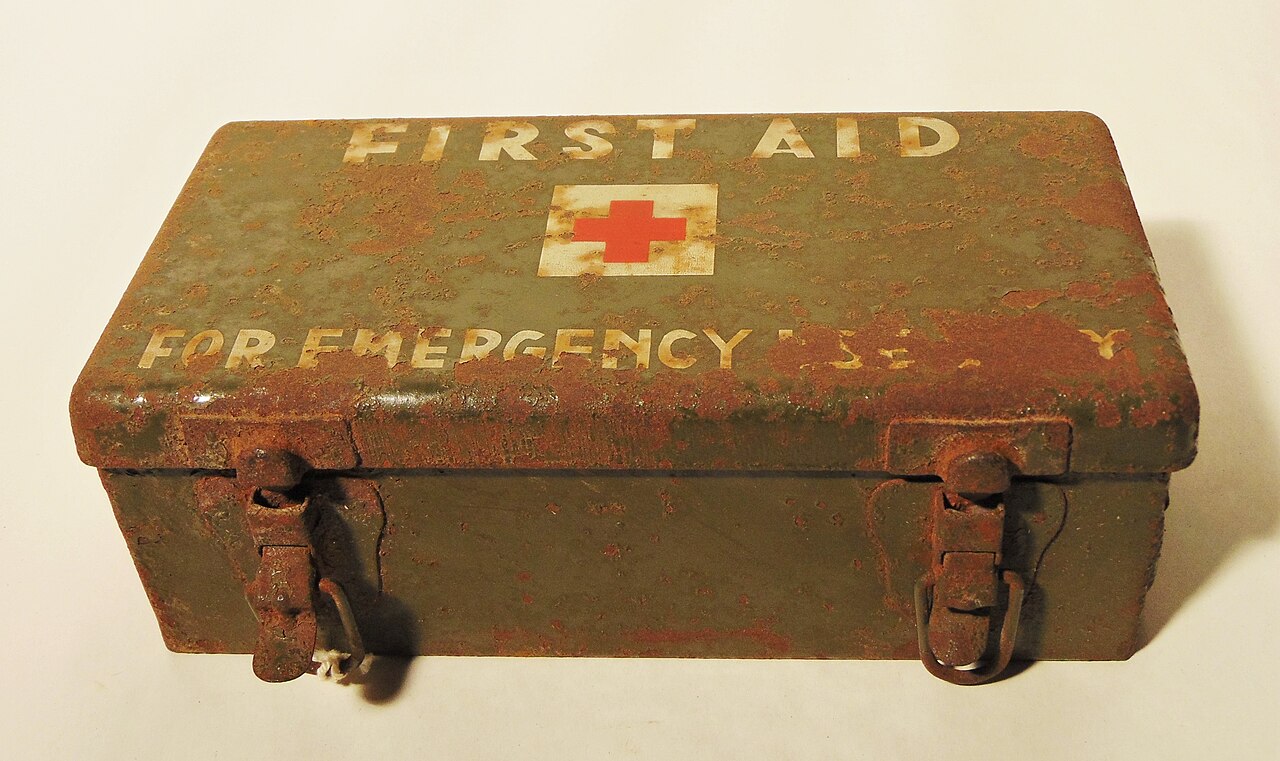
Most pre-built first-aid kits are sold by the gram of gauze, not by the injuries you will actually treat. Survey data from long-distance trails and wilderness medicine courses keeps returning the same ranking — blisters, gastrointestinal trouble, small wounds, muscle and joint pain, bites and stings, and colds — while dramatic trauma almost never appears. A kit built on that distribution weighs 150–250 grams, fits in a one-liter zip bag, and covers the incidents that end ninety percent of trips. This guide builds it category by category, with quantities, approximate weights and an explicit skip list.
Pack for the injury distribution, not the nightmare
Foot problems alone cause more trail-mile loss than every dramatic injury combined. GI upset and minor wounds fill the next tier; sprains, stings and upper-respiratory bugs round out the realistic list. Catastrophic bleeding, fractures and cardiac arrest are rare but high-consequence, so they deserve a few compact items plus knowledge — not a trauma suitcase. Build the kit in that order: frequent-and-trivial first, rare-but-lethal last.
Blister care: the heaviest-use category
Tape early, drain hot spots correctly
Carry a 3–4 m strip of Leukotape-style rigid sports tape wrapped around an old card (~15 g). It sticks to sweaty skin better than moleskin and can patch a hot spot through a week of rain. Pre-tape known rub points before the first descent. For a blister that has already bubbled, clean the skin, lance the edge with a sterilized needle (flame then wipe), leave the roof in place, and tape flat over it. A few small gel blister pads (~5 g) handle heels and toes where tape wrinkles.
Small wounds: cleaning beats antibiotics
For scrapes, punctures and the inevitable knife slip, carry two pairs of nitrile gloves (~4 g total), 4–5 small adhesive dressings, a folded sterile gauze pad or two, and a few wound-closure strips. Mechanical cleaning with treated water matters far more than cream: triple-antibiotic ointment is optional, because most trail wounds are not heavily contaminated and ointment tubes leak weight and goo. Pack a single-use foil packet if you want one; skip the tube. Save the gauze pad for real bleeding — it doubles as pressure dressing and, in a pinch, fire tinder.
The mini pharmacy: six drugs, tiny bags
- Pain and fever: ibuprofen plus acetaminophen/paracetamol, roughly 6–10 tablets each, in labeled mini zip bags. Having both lets you alternate for stronger relief without exceeding either label dose.
- Antihistamine: 4–6 tablets (a non-drowsy type plus, optionally, one or two drowsy tablets for nighttime allergic reactions).
- Antidiarrheal: loperamide, 4–6 tablets for symptom control when you must keep moving to water or shelter; fever or bloody stool changes the plan and means evacuation.
- Electrolytes: 3–6 single-serving packets to replace sodium lost in heat or during GI illness.
- Personal prescriptions: asthma inhaler, epinephrine auto-injector, antibiotics issued for your trip, or anything you take daily — these live on your body, not buried in the bag.
Bites, stings and ticks
Fine-tip tweezers (~6 g) do most of the work here. Remove a tick by grasping it as close to the skin as possible and pulling straight upward with steady pressure — do not twist, burn it, coat it in soap, or squeeze the swollen abdomen. Clean the site and note the date and location. Tweezers also handle splinters and cactus spines. The antihistamine above covers most stings; anyone with a known severe allergy carries their auto-injector on their chest strap. For identification and step-by-step response to ticks, mosquitoes, jellyfish and unfamiliar bites, use the bite, sting and tick aid instead of guessing in the moment.
The rare-but-lethal layer
Bleeding, splints and CPR numbers
One compact emergency blanket or bivvy (~50–90 g) prevents hypothermia in shock and rain; a thin pair of gloves and the gauze pad support direct pressure on serious bleeding. A folded SAM-style flexible splint is optional on day hikes but valuable on remote routes — a folded foam pad, trekking pole or stuffed stuff sack can immobilize a joint almost as well, so weigh the trip before adding the dedicated version. For adult CPR, current American Heart Association guidance is 100–120 compressions per minute, a 30:2 compression-to-breath ratio, and 5–6 cm (about 2 inches) of depth with full chest recoil. Practice the rhythm at home with the CPR and bleeding metronome; in a real event, tempo is what untrained bystanders get wrong.
The complete loadout, quantified
| Item | Quantity | Approx. weight |
|---|---|---|
| Rigid sports tape (Leukotape-style) | 3–4 m strip | 15 g |
| Gel blister pads | 4 | 5 g |
| Nitrile gloves | 2 pairs | 4 g |
| Assorted adhesive dressings | 5 | 8 g |
| Sterile gauze pads + closure strips | 2 pads, 3 strips | 10 g |
| Ibuprofen / acetaminophen | 6–10 each | 12 g |
| Antihistamine / loperamide | 4–6 each | 6 g |
| Electrolyte packets | 3–6 | 20–35 g |
| Fine-tip tweezers | 1 | 6 g |
| Emergency blanket or bivvy | 1 | 50–90 g |
| Needle, single-use ointment, small knife/scissors | Kit | 15 g |
The total lands near 150–250 g before personal medication — roughly the weight of one extra energy bar per category of protection. Tune the exact list for trip length, group size and distance from help with the first-aid kit builder.
The skip list and the one rule that overrides it
- Skip giant rolls of redundant gauze, elastic bandages you will never use, and a bulging tourniquet unless you have trained with one.
- Skip full-size over-the-counter bottles; decant into labeled mini bags with the dose written on them.
- Skip suture kits, surgical staplers and fancy trauma gadgets: untrained improvised surgery causes the damage it pretends to prevent.
- Skip duplicate scissors and multi-tools — one small blade in the kit is enough.
The overriding rule: personal prescription medication is never optional and never shared. Inhalers, epinephrine, rescue antibiotics and daily medicines go on your person in a waterproof bag, with a copy of the generic name and dose. The lightest kit in the world cannot substitute for the drug that keeps you breathing.