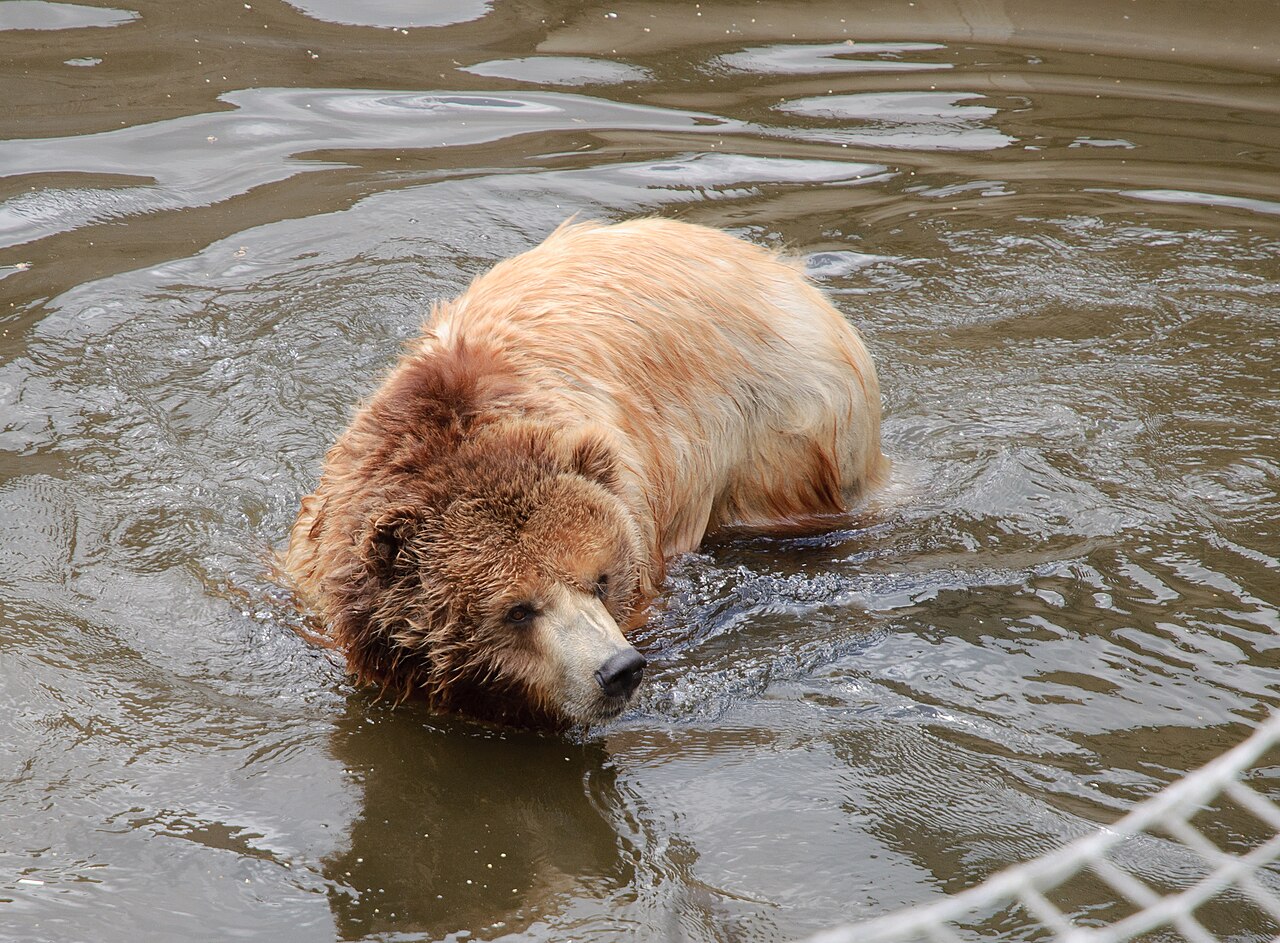
Bear attacks are rare; bear encounters that go badly because of surprise, garbage habits or a panicked reaction are not — and those are the variables you control. Roughly ninety percent of bear safety happens before you ever see a bear: distance discipline, odor management and food storage teach local bears that humans mean nothing edible. This playbook covers avoidance, telling black bears from grizzlies, the counter-balance hang geometry, bear spray handling, and the single decision that determines an attack response — defensive versus predatory intent.
Layer one: never surprise a bear
Almost all defensive encounters are surprise encounters. Run the same four-part routine all day:
- Distance: never approach closer than about 100 yards (91 m) from bears (and 25 yards from most other wildlife). Use binoculars, not your feet, to improve the view, and give any bear on a kill extra room.
- Make noise: talk, sing or call out "hey bear" near blind corners, dense willow, streams and headwinds. Bells help in constant brush but a human voice carries better in surprise terrain.
- Read the wind: if you are walking downwind, the bear cannot smell you coming — increase calling frequency and slow down.
- Travel in groups and keep children between adults; statistics consistently favor parties of three or more.
If you find a fresh kill, scavenged carcass or concentrations of tracks and diggings, leave the area the same way if possible and detour wide downwind so the bear smells you departing peacefully.
Black bear or grizzly? Read three features
Color is useless — black bears come in cinnamon and blonde, and coastal grizzlies can look dark. Use body geometry instead:
| Feature | Grizzly / brown bear | Black bear |
|---|---|---|
| Shoulder hump | Prominent muscle hump over the shoulders | Absent; back line is level |
| Face profile | Dished, "concave" face with short rounded ears | Straight Roman-nose profile, larger pointed ears |
| Tracks / claws | Long front claws, often visible well ahead of toe pads | Short claws close to the toes |
| Rump | Often lower than the shoulders | Higher rump than shoulder |
Identification matters most for choosing play-dead versus fighting back, covered below. When you genuinely cannot tell, react to the behavior, not the species guess.
Food storage: the hang geometry and the canister
Canisters first where required
In many Sierra, Cascades and Rockies jurisdictions an Interagency Grizzly Bear Committee–certified canister or park-provided box is mandatory, and it is the most foolproof system: store all food, trash and scented items (toothpaste, sunscreen, deodorant), park it at least 100 yards from the tent, and sit on it to open it so a paw cannot flip the lid.
The PCT counter-balance hang
Where hanging is legal and trees allow, the classic geometry is exact: a branch at least 12 feet (3.7 m) above the ground, the hang point at least 4 feet (1.2 m) out from the trunk, and the bottom of the lowest bag at least 6 feet (1.8 m) off the ground. Two equal-weight bags are roped over the branch and hooked against each other on a stick so neither bag hangs within bear reach, yet you can retrieve both with a trekking pole. Rope length depends entirely on branch height and trunk distance — calculate the exact line, carabiner and stake needs with the bear hang and food storage calculator rather than arriving at dusk with too-short cordage.
The attack decision: defensive or predatory?
Species and context decide the response. Most grizzly charges are defensive: a sow with cubs, or a bear on a carcass, is removing a perceived threat. Black-bear attacks on adults are more often predatory — deliberate, silent approach and contact without the huffing and ear-sweeping display.
- Defensive grizzly (sows with cubs, carcass defense): play dead. Drop your pack if it protects your back, lie flat on your stomach, clasp hands behind your neck, spread your legs so the bear cannot easily roll you, and stay still. After contact ends, wait minutes before moving — bears often watch from cover.
- If the attack persists beyond a few minutes and shifts to deliberate feeding, it has turned predatory: fight back. Aim kicks, rocks and any weapon at the face, eyes and nose.
- Predatory black bear: fight for your life immediately. Do not play dead; kick, punch and gouge the muzzle, eyes and nose and keep shouting. A black bear that made contact as a predator is testing prey, and resistance frequently breaks the attempt.
- Never run. Running triggers chase instinct in both species and guarantees the surprise-mode charge. Back away slowly only while the bear is stationary and aware of you.
Bear spray: the most effective deterrent, carried correctly
Peer-reviewed park data put bear spray ahead of firearms for stopping aggressive bear behavior, but only when it is reachable and used right. Carry a regulated EPA-registered bear spray (capsaicin, 7.9+ ounces typical) on a chest or hip holster — not inside the pack. Fire a 2–3 second burst into the bear's path at roughly 30–40 feet as it charges, aiming slightly downward into the nose-line, and be ready with a second burst. Note the wind: firing into a headwind blinds you instead of the bear. Practice with an inert practice canister. At night, sleep with the canister inside the tent at arm's reach, safety on, alongside your headlamp and shoes.
Camp layout: separate eating from sleeping
A bear that connects your sleeping spot with food becomes a problem animal, so design camp as three separated zones: cook and wash dishes at least 100 yards (about 90 m) crosswind or downwind from the tent; hang or canister-store food and every scented item in the third zone; sleep in clean clothes that never touched the cooking area. Never cook or eat in the tent, never sleep in the same clothes you cooked in, and store garbage as carefully as food — peels and freeze-dried bags smell identical to a bear. If you see a cub, never approach for a photo; the mother is within meters and will defend it. Back out quietly the way you came.
Species-specific steps and the rest of the food web
Memory fades under adrenaline. Before the trip, walk through the sequence for your destination with the wildlife encounter assistant, which gives species-by-species steps for bears, cougars and moose — each demands different body language, and a moose (more aggressive than many bears in rut and calving season) should not be met with bear tactics. Bear country is also insect country: plan biting-fly and mosquito protection together with your route using the insect repellent planner, since swatting through a thicket while distracted is exactly how surprise encounters happen.
Before you enter bear country
- Check local parks agency alerts for active sightings, closures and food-storage rules.
- Pack a certified canister where required; otherwise rope and bags measured for a proper hang.
- Holster EPA-registered bear spray on your chest; carry an inverted practice canister at home.
- Plan a 100-yard triangle: cooking, storage and sleeping zones separated.
- Brief every group member — including children — on noise, distance and the spray.
- Identify species features in advance; rehearse play-dead position and fight targets.
- If you encounter a bear, stay together, speak calmly, give it an escape lane, and never run.
- Report every aggressive or food-conditioned encounter to rangers so others can be warned.