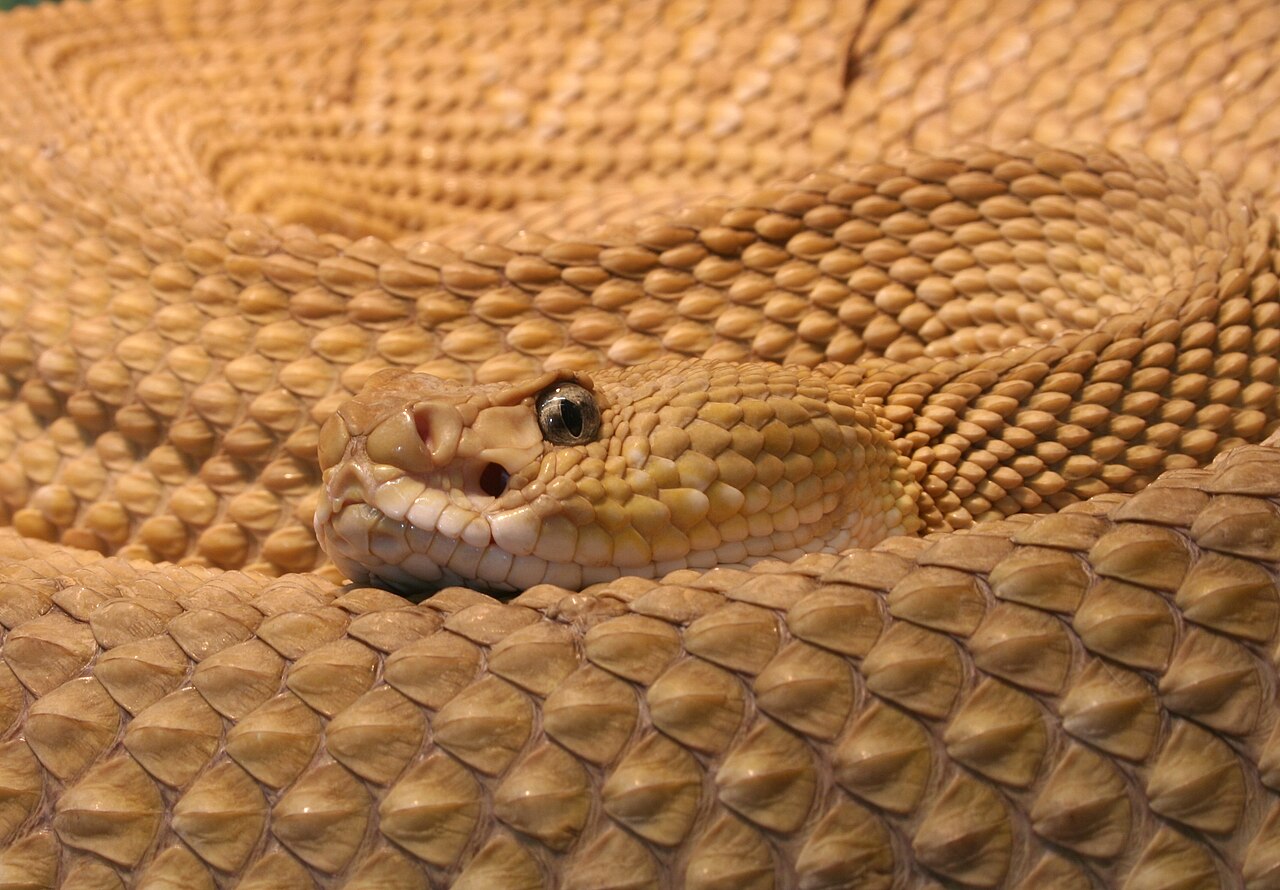
Venomous snakes in North America bite an estimated 7,000–8,000 people every year, according to CDC and NIOSH summaries, and deaths are very rare — modern antivenom and emergency care mean roughly five or fewer fatalities annually. The uncomfortable detail buried in those statistics is behavior: roughly half of venomous-snake bites involve people deliberately handling the snake, often after alcohol. Snakes do not hunt humans. They defend a coiled spot they believe is hidden. This guide covers the prevention habits that eliminate almost all risk, the calm response that preserves tissue and life, and the field-medicine myths that cause more damage than the venom.
Start with the real odds and the real pattern
Most bites occur on the hands, wrists, ankles and feet — body parts people put where they have not looked. Rattlesnakes, copperheads, cottonmouths and coral snakes are all ambush or retreat animals: they rely on camouflage, strike roughly half to two-thirds of their body length, and would prefer you leave. A snake coiled in the open that is rattling or buzzing is warning you; a silent, well-hidden snake under a log is the one that bites without announcement. Respecting that difference shapes every habit below.
Prevention: habits that remove nearly all risk
- Stay on the trail. Most strikes happen at the trail edge where ground cover begins; keep feet and poles on the cleared tread.
- Tap tall grass and brush ahead with trekking poles. The vibrations and movement advertise you several steps early; snakes leave rather than hold ground.
- Wear long pants and closed boots. Heavy denim, gaiters or snake gaiters over leather boots turn most ankle-and-lower-leg bites into glancing or dry hits; flip-flops and bare ankles are the highest-risk footwear possible.
- Use a headlamp at night and at dawn/dusk. Warm roads and trails attract snakes after dark; never step over obstacles you cannot see beyond.
- Never put hands into rock crevices, woodpiles, hollow logs or heavy leaf litter. If you need support on a climb, choose bare rock you can inspect.
- Step onto logs, not over them. When crossing a fallen log, step up onto it first and look at the far side — the classic resting spot — before committing your weight down.
- Give any observed snake a wide, slow berth of at least several meters and detour behind it; do not linger for a portrait.
If you come face to face
Freeze, locate the head, and back away on the same line you arrived. A coiled snake can only strike a short, fixed distance; beyond that you have time. Do not wave poles at it, throw anything, or try to move it — herding a rattlesnake is how bystanders get bitten. Teach children that a stick is not a sword and that poking a "dead" snake is especially dangerous: freshly killed snakes retain bite reflexes for some time, and many bites happen to people convinced the animal was already dead. This guide never provides methods for killing snakes; killing attempts are themselves a leading cause of bites.
If someone is bitten: the modern response
The first five minutes
- Move everyone well back from the snake — at least several body lengths. Do not chase, capture, kill or photograph it; a second bite compounds the emergency.
- Keep the person calm and still. Panic and exercise accelerate circulation; reassure them that survival is the overwhelming norm with treatment.
- Remove rings, watches, tight boots and restrictive clothing from the bitten limb before swelling begins.
- Splint the limb in a neutral, functional position with a trekking pole or padded branch so it cannot move; modern guidance prioritizes immobilization, with the bite kept at roughly heart level or slightly below rather than raised.
- Note the snake in words only: overall color, pattern bands or blotches, head shape, pupil shape if safely visible, and behavior. Do not approach for a picture.
- Evacuate to a hospital confirmed to carry antivenom as quickly and gently as possible; call ahead so the emergency department can prepare. Walk the victim only when transport cannot reach them.
Why description beats the snake
Antivenom in the United States is increasingly cross-effective across pit vipers, so clinicians usually treat the patient's symptoms rather than a precise species ID — which is why bringing the snake is never worth another bite. Before your trip, look up the venomous species for your exact region with the snake and venom lookup, so the words you note in the moment (diamond pattern, triangular head, black-and-yellow bands) already mean something. For aftercare, allergic symptoms and bites from other creatures, the bite, sting and tick aid walks through the steps without requiring a confident field identification.
The myths that make bites worse
| Myth | Why it is harmful | Do instead |
|---|---|---|
| Cut the bite and suck out venom | Damages tissue, infects the wound and removes almost no venom | Wash lightly, immobilize, evacuate |
| Tourniquet above the bite | Traps concentrated venom locally and can cost the limb; untrained releases can shock the system | No tourniquet; loose splint only |
| Ice the wound | Cold does not neutralize venom and worsens local tissue injury | Leave the limb at ambient temperature |
| Electric shock from a spark plug or stun gun | No evidence of benefit; adds burns and delays real care | Do not do this |
| Alcohol or caffeine for the victim | Alcohol dilates vessels and speeds spread; caffeine adds strain | Small sips of water only if not nauseated |
| Pressure bandage wrapped tightly (Australian style) | Used for some neurotoxic elapids abroad; not recommended for North American rattlesnake bites, where local tissue damage dominates | Splint without compression |
Know your region before the trip
The snake you might meet is a geography question. Desert Southwest trails mean western diamondbacks and Mojaves; the Appalachians mean timber rattlers and copperheads; Southeast wetlands add cottonmouths and coral snakes; high mountains and northern tiers are essentially pit-viper free. Behavior varies too — many Southwest rattlers are jumpy in hot monsoon afternoons and sluggish on cold mornings. Run your destination through the snake and venom lookup during planning, brief the whole group, and save the local poison-center line (in the U.S., 1-800-222-1222) in your phone alongside rescue contacts.
The one-screen checklist
- Boots, long pants or gaiters; headlamp with fresh batteries.
- Poles forward in grass; step onto logs and inspect the far side.
- Hands never enter unseen crevices, piles or litter.
- Never handle, corner, kill or photograph a snake at close range.
- If bitten: retreat, calm, remove jewelry and boots, splint, describe in words.
- No cuts, suction, tourniquets, ice, shock, alcohol or tight wraps.
- Evacuate gently to an antivenom-capable hospital and call ahead.