“Drink two liters a day” is a rounding error pretending to be a plan. A cold-weather stroller loses under half a liter in an hour; a loaded hiker grinding up a sun-baked canyon can lose 1.5 liters or more in the same sixty minutes, along with several grams of salt. Quotas ignore both the weather and your body, and the opposite extreme — drinking as much water as possible — causes a condition that kills hikers every year. The professional approach is boring but precise: measure your actual sweat loss, replace most of it, add sodium when the effort is long or salty, and watch three simple indicators. This guide gives you the one-hour test, the numbers behind electrolytes, and how to tell dangerous dilution from heat illness.
Why a fixed 2 L target is wrong
Water needs are driven by sweat loss, and sweat loss varies enormously with temperature, humidity, sun exposure, pack weight, fitness, acclimatization and individual physiology — two hikers on the same trail can differ by a factor of two or three. A fixed number under-supplies the big sweater in heat and over-supplies everyone in cold, slow conditions. Worse, a fixed quota measures input, while your body cares about balance: fluid lost versus fluid replaced, plus the sodium concentration of what remains. Instead of a daily number, build a personal rate and check it against what your body reports.
The sweat-rate test: your number, one hour
This is the same protocol sports physiologists use, and it needs only a scale and a watch:
- Wake, toilet, then weigh yourself nude (or in dry minimal clothing) and record the starting weight.
- Do a representative one-hour effort in expected conditions, wearing what you will on the trip.
- Track every fluid ounce or milliliter you drink during the hour; do not urinate if avoidable (if you do, note it).
- Towel-dry, strip the same clothing, and weigh again.
The formula is: sweat loss (ml) ≈ (pre-weight − post-weight) in grams + fluid drunk (ml) − urine (ml), then divide by the session hours. Body mass changes in grams and water volume in milliliters are effectively interchangeable.
A worked example
78.0 kg before, 77.2 kg after = 800 g ≈ 800 ml of body mass lost; plus 500 ml drunk, no urine: sweat rate ≈ 1,300 ml/hour. Repeat the test in cold, mild and hot conditions — your rate changes more with weather than training changes it — and re-test after heat acclimatization, which makes you sweat more efficiently.
Replace 80–100% — not 110%
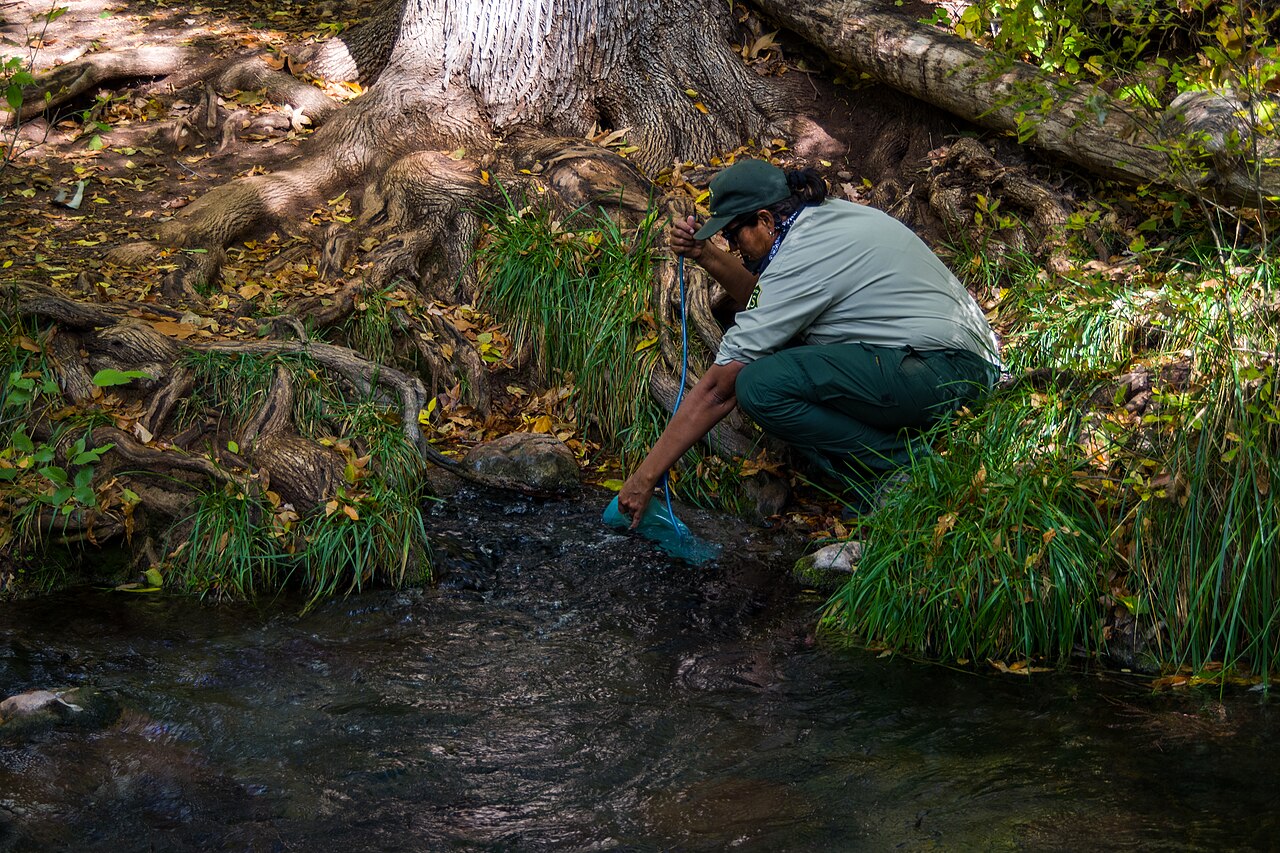
During sustained effort, aim to drink about 80–100% of measured sweat loss, spread across the hour rather than chugged at a checkpoint. Perfect 100% replacement is neither possible nor necessary: slight, tolerated dehydration up to about 2% of body weight generally preserves performance, while forcing down more than you lose is what opens the door to dilutional problems. Practically, a 1,000 ml/hour sweater sips roughly 800–1,000 ml across that hour. In the field, use break stops to top bladders from cached or treated sources and plan carry volume per leg with the hydration & sweat planner — the number of liters in your pack should equal the next leg's predicted loss plus a safety margin, not a generic “two bottles.”
Electrolytes: when plain water stops being enough
Sweat is not pure water; it contains sodium in a concentration that varies widely between individuals — roughly 200–1,000 mg of sodium per liter, with most people between 300 and 700 mg/L. Crusty white salt on skin, stinging eyes and gritty clothing mark the high-sodium sweaters at the top of that range.
| Effort | Fluid | Sodium strategy |
|---|---|---|
| Under 60 min, any intensity | Water to thirst usually suffices | Food at camp covers daily salt |
| 60–90 min in heat | 500–1,000 ml/h per sweat rate | Start an electrolyte drink or salty snack |
| Multi-hour / multi-day hot effort | Per measured rate | 300–700+ mg sodium per liter of replacement |
| Very heavy / salty sweater | Per measured rate | Toward 700–1,000 mg/L; test products in training |
Beyond about 60–90 minutes of sustained sweating, or whenever conditions are genuinely hot, replacement fluid should carry sodium; whole-food options (salted nuts, crackers, broth, electrolyte tablets) work as well as branded drinks. Test every product on a training day — a new drink mix that causes gut distress at mile 18 is not a bargain.
Hyponatremia: the overhydration emergency
Drinking large volumes of plain water beyond losses dilutes blood sodium. Early hyponatremia looks deceptively mild — bloating, nausea, a throbbing headache, weakness — and then progresses to vomiting, confusion, seizures and swelling of the brain. Sustained intake above roughly 1 liter per hour for several hours, especially with little sodium in the fluid, is the classic pattern; slow hikers, people drinking “ahead of thirst,” and those on diuretics are over-represented. The trap is that symptoms overlap with heat exhaustion and dehydration, and the reflex answer “drink more water” is exactly wrong:
| Sign | Suggests dehydration / heat illness | Suggests hyponatremia |
|---|---|---|
| Weight vs. morning baseline | Down noticeably | Same or up; rings/shoes tight, puffy |
| Urine | Scant, dark | Frequent and copious, often clear |
| Drinking history | Under-replaced, behind thirst | Large plain-water intake, no salt |
| Key response | Shade, cool, sodium-containing fluids | Stop plain water; salty food, salty fluids; evacuate if confused |
Altered mental status, seizure or collapse of any cause in the heat is an emergency: cool aggressively and call 911 / 112 / 120.
Three monitors: urine, thirst, morning weight
- Urine color: aim for pale lemonade, not apple juice and not permanently clear. Dark output means catch up; endless clear output on huge intake means you are overshooting.
- Thirst: a reasonable short-term governor for short efforts; drink to thirst between measured top-ups, but note that thirst under-reads during hard work and at altitude.
- Morning body weight: multi-day trips, return to roughly your baseline each morning. A persistent multi-day downward drift means under-fueling and under-drinking; stable or rising weight with symptoms points toward overhydration.
Heat index, acclimatization and the energy bill
Humidity makes heat worse by blocking evaporation: at 90 °F (32 °C) with 60% relative humidity, the heat index reaches about 99.7 °F (37.6 °C), where heat-cramp and exhaustion risk climbs into official caution zones. Check the heat safety index before hot trips, schedule hard climbing for morning hours, and treat shade and wind as resources to route through. The body adapts substantially in about 10–14 days of repeated heat exposure: earlier sweating onset, more dilute sweat, lower resting heart rate — but an adapted body sweats more, so water and sodium needs rise rather than disappear. Also note that producing sweat is an active cooling system that burns calories; hot-weather days raise energy needs even when pace feels easy, so budget food with the calorie & food planner rather than eating a winter ration in July and bonking. Finally, adherence is part of the plan: ice-cold or flavored water genuinely increases how much people drink voluntarily — insulated bottles and a squeeze of lemon or an electrolyte tab are performance gear, not luxury.
The hydration routine
- Run the one-hour sweat-rate test in representative conditions; re-test across seasons and after acclimatization.
- Plan per-leg carry volume at 80–100% of predicted loss plus margin with the hydration planner.
- Sip continuously; add sodium for efforts over 60–90 minutes and all-day heat.
- Monitor urine color, thirst and morning weight; watch partners for bloating or confusion.
- Check the heat index, start early, use shade, and allow 10–14 days for heat adaptation.
- Budget the extra calories of heat cooling; keep fluids cold and palatable so you actually drink them.